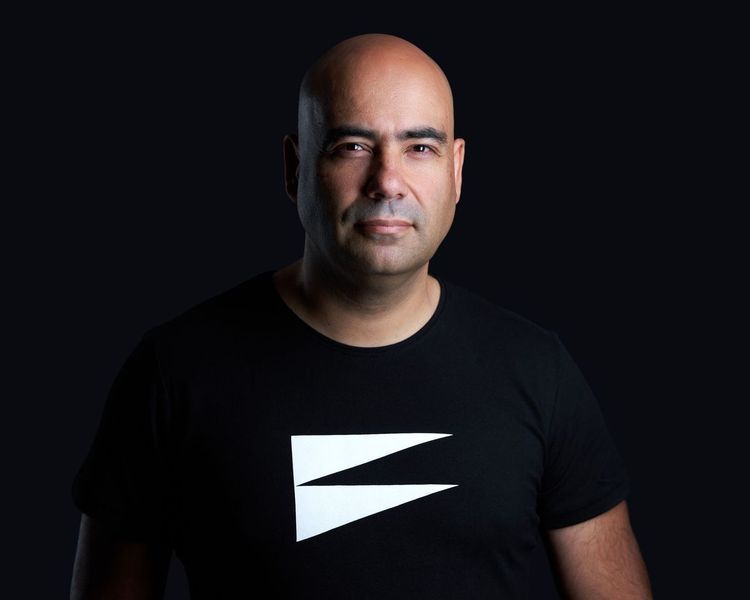




Kuba Danecki — Head of UX Competence Center at BNP Paribas
From zero to hero: how we turned a team of two designers into a strategic UX Center of Expertise.
Design Strategy
🇬🇧 English


Being part of a hyper-growing IT organization can be challenging; you need to scale your design team while ensuring your objectives and goals are aligned with your project stakeholders, all while achieving the best possible design quality. If this amount of work sounds both familiar and daunting, then consider creating a Design Center of Excellence.
Having clearly defined roles and responsibilities for everyone involved while taking a growth-oriented approach that focuses on standards and adapting to changes might answer most of your struggles.
We, at Brainly, are happy to share our insights on how we manage design challenges by using a domain-oriented perspective to achieve our common goal.
Watch this WaysConf session, then continue with related talks or explore the current programme.
Brainly’s design leaders describe how a Design Center of Excellence supported a distributed organization during rapid growth. Their model combines specialized domains—design systems, customer-experience strategy, UX research, and design operations—with designers embedded in product teams. The center provides shared foundations rather than taking every decision away from teams: a multidimensional design system, alignment rituals, a unified product-design process, research operations, role expectations, and community support. The talk is candid about the central tension between autonomy and consistency. Brainly’s answer is a federated structure with explicit contributors, decision-makers, routines, and responsibilities. Researchers enable product teams instead of becoming a bottleneck, while design operations connects people, tools, vendors, and professional-development processes. The session’s durable lesson is that a Center of Excellence is not simply a central design team. It is an operating system for cross-team decisions, shared quality, and learning across a growing product organization.
Brainly’s system includes product, brand, marketing, interaction, accessibility, motion, code, documentation, and processes—not only a component library.
Watch from 6:24Embedded teams retain autonomy, while domain experts, contribution processes, alignment meetings, and clear decision rights protect consistency.
Watch from 9:31Cross-product routines, communication channels, one design process, and journey-level recommendations connect otherwise separate team goals.
Watch from 15:45A small central research function supports strategic work and operations while embedded researchers and trained designers handle work close to product teams.
Watch from 21:32Role definitions, leveling, onboarding, health checks, tools, communication, and a shared process make expectations visible across functions.
Watch from 25:26These concise notes were edited from automatic captions and checked against the talk structure. They are not a verbatim transcript.
Brainly’s design organization grew from a small centralized team into a federated set of specialists embedded in independent product teams. Growth brought stronger domain ownership, but also familiar risks: isolated product design, inconsistent practices, uneven research capacity, fragmented experiences, and many stakeholders to align. The Design Center of Excellence developed as a way to support those teams with shared foundations while keeping the benefits of people working close to their product context.
Watch from 0:14The design-system domain covers more than interface patterns. Brainly includes product, brand, marketing, motion, accessibility, code, file structures, guidance, and contribution processes in the shared system. A specialist central team leads the direction, while contributors in distributed teams help develop and use it. Regular alignment, documentation, onboarding, defined roles, and feedback are necessary because publishing components is easier than maintaining collaboration across the organization.
Watch from 6:24The customer-experience domain uses recurring design syncs, dedicated communication spaces, synchronization rules, and a unified design process. These practices make dependencies visible and create a place to resolve inconsistent decisions. Cross-product workshops and customer-journey work connect team-level roadmaps to a broader learning experience. The center also invests in the design community because alignment depends on relationships and feedback, not only process documentation.
Watch from 15:45Brainly combines researchers embedded in product teams with a central group responsible for strategic, cross-product work and shared operations. This avoids choosing between local context and company-wide learning. Research operations supplies the less visible infrastructure: intentional roadmaps, tools, privacy and consent protocols, participant recruitment, stakeholder alignment, and follow-through into implementation. Researchers also train and guide designers so a small specialist team enables more studies instead of becoming the queue for every request.
Watch from 21:32Design operations examines inherited practices, keeps what still works, and adapts it for a larger organization. The work includes job expectations, skill matrices, professional-development processes, team health, vendor and tool management, communication channels, and community rituals. Its purpose is to connect the right people around a problem and make collaboration easier. The domain does not replace design leadership; it creates repeatable support for the community and its many cross-functional relationships.
Watch from 25:26Brainly maps goals, tasks, outcomes, and responsibilities across research, definition, ideation, prototyping, review, implementation, and learning. Different roles lead different stages, but alignment continues throughout. Researchers work with designers, product managers clarify goals and dependencies, interaction designers connect product work with the design system, and delivery partners lead implementation. The closing message is pragmatic: begin with a workable process, learn from failures, refine it, and use shared goals to balance team autonomy with a seamless experience.
Watch from 32:53