
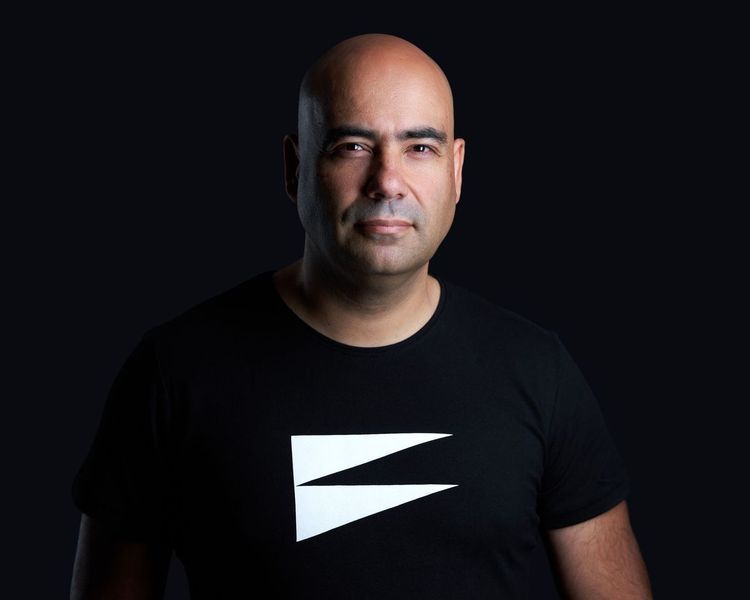
Adriano Esteves — Founder and Creative Designer at Bürocratik
Design is not Tequila. It can’t make everyone happy.
September 20, 2024
13:00
Design Strategy
🇬🇧 English
UX is often perceived as something related to the final product, but that's just the tip of the iceberg. Before the product can serve its purpose to users, it must be created by people. And the experience of each of those people has a great influence on the final outcome.
Regularly, we overlook the journey of building — where challenges happen on a daily basis and the pains of those crafting the product are pushed aside. In today's era of cross-functional teams spanning multiple specializations, speaking a unified language is imperative yet demanding. Therefore, it's crucial to keep consistency, transparency, and usability within organizations. By focusing on this aspect, we can strive for more
seamless collaboration and drive collective success. But how do we achieve this?
In this talk I will dive deeper into the layers of user experience beyond the finished product. Drawing from my experiences in the corporate world, game production, and more, I'll cast some light on navigating through spread-out teams and a landscape filled with diverse tools and ideas. I will tell you about my ways to bring it all together into a great whole — and what can go wrong along the way.
With a dedication to improvement, I'm on a mission to bridge gaps and foster collaboration across specialities and perspectives, to create a unified environment supporting the process of creating well-crafted products. In the era of many new designers joining our UX world, I want to show that it has much more to offer, and how we can contribute to its development. I want to show the audience a broader view of UX
and why it matters, offering practical tips and insights on how to support the invaluable contributors behind the scenes — the heroes without whom our products would never see the light of day. The other edge of the UX sword.
Watch this WaysConf session, then continue with related talks or explore the current programme.
At WaysConf 2024, Anna Nojek, UX UI Designer at CD PROJEKT RED and mentor at Infoshare Academy, explains why end-user experience is directly bound to internal team experience. Using real-world examples—from public transport ticketing failures in Poland's Tricity to game development workflows—she illustrates how poor internal tools, fragmented knowledge, and blocked dependencies degrade the final product. Nojek details how introducing internal UX design at CD PROJEKT RED led to systems like Asset Hive, which reduced asset search times from two days to five seconds. She outlines strategies for scaling internal UX across dozens of production departments, adapting processes to team needs rather than forcing rigid frameworks, and ensuring product owners externalize their vision. Ultimately, she argues that internal employee experience and external product experience form the two inseparable edges of the user experience sword.
The experience of internal creators directly shapes the final end-user experience. When developers and artists lack adequate support and proper tools, delays and product bugs inevitably follow.
Watch from 15:34Fragmented asset repositories waste significant creative time and slow down delivery schedules. Building centralized internal tools like Asset Hive can reduce asset discovery time from days to seconds.
Watch from 22:28Forcing rigid design frameworks onto engineering teams creates friction and resistance. UX designers must adapt design methodologies to match existing team dynamics and workflows.
Watch from 30:40Involving oneself in every implementation step makes the designer a bottleneck for project velocity. Building trust and empowering teams allows production to move forward smoothly without constant oversight.
Watch from 31:20Leaders should watch for visible team frustration and daily complaints regarding clunky internal systems. Persistent internal friction is a clear indicator that an organization needs dedicated internal UX support.
Watch from 40:16These concise notes were edited from automatic captions and checked against the talk structure. They are not a verbatim transcript.
When the Fala transport system was introduced in Poland's Tricity, it was marketed as a seamless unified ticketing solution. Instead, implementation delays, unexpected costs, and clunky features resulted in widespread public dissatisfaction. This breakdown demonstrates a fundamental UX principle: user experience is a chain of dependencies. When internal management, technical integrations, and team coordination fail behind the scenes, end users inevitably suffer from inconsistencies, frustration, and broken functionality. Designing successful products requires acknowledging and fixing these root operational causes.
Watch from 2:28Workplace needs fall into two distinct categories: soft employee experience and hard functional support. Employee experience encompasses culture, benefits, remote flexibility, and salary. While essential for morale, soft perks alone do not guarantee professional productivity. To achieve operational efficiency, organizations must fulfill hard needs by providing intuitive tools, clear pipelines, and streamlined workflows. When internal technology fails to support creators, teams struggle to meet demanding delivery standards, ultimately undermining product quality.
Watch from 13:03Development teams routinely encounter five systemic hurdles: scattered assets across disparate repositories, poor cross-team transparency, overly complex manual workflows, blocked interdepartmental dependencies, and internal tools built by engineers without design expertise. When studio assets are dispersed across numerous locations, creators waste days searching for existing files or re-creating them from scratch. Furthermore, clunky internal interfaces slow down work and contribute to team burnout, making structured internal UX design essential for modern production.
Watch from 16:42To resolve asset fragmentation at CD PROJEKT RED, the studio appointed an internal tech-centered UX designer to create Asset Hive. This centralized database aggregated assets across multiple game titles, enabling artists and developers to retrieve critical production files and documentation instantly. By replacing a process where searching through nine repositories took up to two days with a system that returned results in five seconds, the studio dramatically boosted creator productivity and demonstrated the high return on investment of internal UX design.
Watch from 20:54A frequent mistake among UX professionals is expecting development teams to conform rigidly to theoretical design frameworks. When designers force standardized processes onto established pipelines, teams often push back with reluctance. A far more effective strategy is adapting the UX process to fit the specific needs and constraints of the team. By conducting regular feedback sessions, listening carefully to practitioner concerns, and adjusting workflows iteratively, designers can foster genuine trust and active collaboration.
Watch from 29:47