
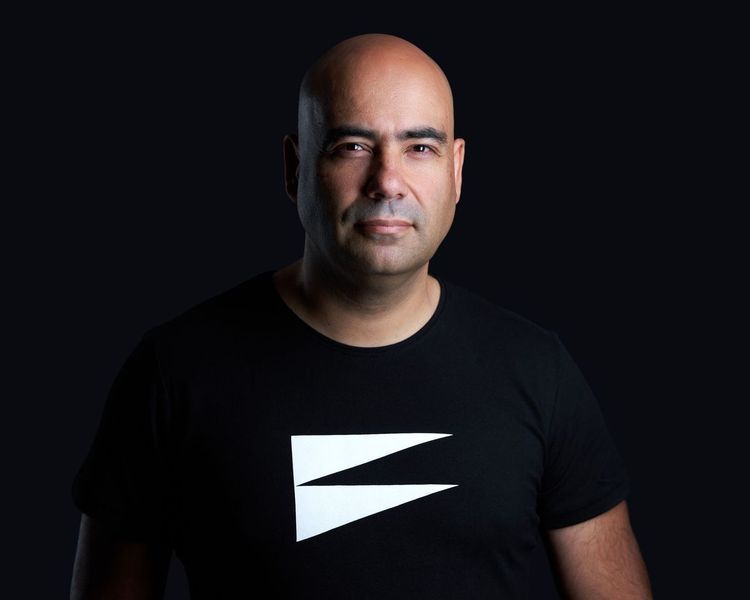
Adriano Esteves — Founder and Creative Designer at Bürocratik
Design is not Tequila. It can’t make everyone happy.
September 20, 2024
13:00
Design Strategy
🇬🇧 English


My journey from designer to a successful product launcher. I launched a total of 19 native iOS/Android apps from ideation to the market in just 475 hours. Attendees will walk away with a better understanding of how to take their product ideas from concept to market using no-code tools, and will be inspired to embrace their own creativity and entrepreneurial spirit to bring their ideas to life.
Watch this WaysConf session, then continue with related talks or explore the current programme.
At WaysConf 2024, UX/UI and digital product designer Karla Fernandes demonstrates how designers can transition into full-fledged product launchers by leveraging no-code tools. Reflecting on her 25-year career, Fernandes outlines how she published 21 mobile applications across iOS and Android in 689 total working hours without traditional programming. She breaks down her modular technical stack—combining Figma for UI architecture, Bravo Studio for native application wrapping, Airtable or Xano for backend database management, and Tally for web forms. Fernandes details a structured five-step framework spanning ideation, Figma layer naming, mobile testing, API database binding, and store publication. Through case studies of her own projects—such as Scarf App, 100 Animals, and UXUI Hub—alongside non-technical client builds, she illustrates how no-code accelerates release cycles from months to weeks. Ultimately, Fernandes argues that no-code empowers designers to bridge the gap between design strategy and production, positioning them to build functional V1 products independently.
Traditional software handoffs between designers and developers often incur high costs, slow timelines, and visual or functional discrepancies. Using no-code tools enables designers to deploy production-ready applications independently.
Watch from 2:27Rather than relying on a single all-in-one platform, successful no-code production combines specialized tools—such as Figma for interface architecture, native wrappers like Bravo Studio, backend databases like Airtable, and Tally for form validation.
Watch from 11:09Developing a minimum viable product with no-code reduces time-to-market from typical 7-12 month traditional coding cycles down to 4-8 weeks, allowing creators to gather immediate feedback from real users.
Watch from 21:53Launchings free niche mobile applications can act as an effective top-of-funnel marketing engine, building trust and driving user discovery toward paid courses, products, or services.
Watch from 29:47Trying to master entire technical stacks at once leads to burnout; designers succeed faster by adopting new tools and components on a project-by-project basis driven by concrete product requirements.
Watch from 40:40These concise notes were edited from automatic captions and checked against the talk structure. They are not a verbatim transcript.
For decades, digital product creation has suffered from a fundamental disconnect between visual design work and final code implementation. Designers frequently deliver polished mockups, only to see technical constraints, budget limits, or miscommunications alter the end product during development. Conversely, developers may struggle to build interfaces that match design specifications. This traditional process is slow and costly, frequently producing software that deviates from the original vision. Leveraging no-code tools shifts this paradigm by enabling designers to directly build and deploy functional, production-ready software.
Watch from 2:04For ten years, an application concept for teaching scarf-tying techniques remained stuck on my desktop because I lacked native iOS programming skills and could not keep up with evolving Apple development guidelines. In late 2020, I adopted no-code tools and dedicated 77 hours over December to designing, assembling, testing, and publishing both free and paid versions of Scarf App to mobile app stores. Seeing real users download and engage with a product I built independently was transformational, proving that coding barriers no longer need to prevent creators from releasing long-standing ideas.
Watch from 5:35Building and deploying mobile applications efficiently relies on a structured five-step workflow. First, identify a clear problem to solve, then construct functional UI prototypes in Figma while carefully organizing layer names and tags. Native compilation tools like Bravo Studio read these Figma tags to generate interactive navigation and UI components. After previewing and testing the interface on a mobile device, connect dynamic backend data using platforms like Airtable or Xano, and finalize store publication. This disciplined process facilitates rapid iteration and repeatable product launches.
Watch from 14:08What originated as a simple curated event newsletter evolved into UXUI Hub, a multi-featured platform containing job boards, learning resources, and expert directories. By launching an initial V1 built in just 22 hours, I established a baseline to collect user feedback and track behavioral metrics. Analyzing user click paths informed targeted feature updates, such as adding specialized discount sections and networking features. Over seven months of iterative refinement, app downloads grew by nearly 300%, illustrating how modest initial releases can scale into thriving digital products.
Watch from 22:18No-code mobile applications offer significant strategic value beyond direct monetization by functioning as high-converting lead generation engines. In one client project, a certified management accounting coach hired me to build a free test-preparation application for accounting students. Although the app provided free study content without direct subscription fees, it attracted over 5,400 active users. Delivering high utility at no cost established immediate authority and naturally directed a substantial portion of users toward purchasing his paid prep courses.
Watch from 28:56