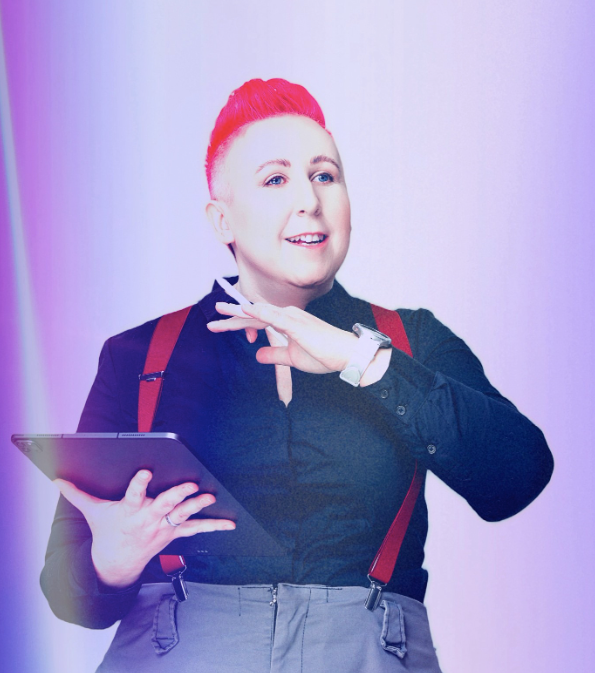

Ania Koronowicz — Senior UX Designer at Atlassian
Building relationship with your users
Research & Discovery
🇬🇧 English


Are you struggling to convince the business about testing? Or is it your team that doesn't believe in testing in an agile environment? You write reports for the sake of writing, yet you'd like your research to have a real impact on the product design? Join me to learn how to conduct usability testing in agile projects, where a mix of quantitative and qualitative methods can impact research effectiveness, reliability, and replicability of results. I'll talk about metrics, RITE testing, and quantitative methods in usability testing.
Watch this WaysConf session, then continue with related talks or explore the current programme.
A practical comparison of qualitative usability testing, quantitative measures, and the Rapid Iterative Testing and Evaluation method. The talk defines usability through learnability, efficiency, and successful task completion, then argues that observing customers only at the end of a project is too late. Metrics show where performance changes, qualitative sessions help explain why, and RITE turns each small group of sessions into immediate design decisions and a revised prototype. The useful shift is from producing research reports to maintaining a continuous, observable cycle of testing and improvement.
Learnability, successful completion, efficiency, and error recovery give teams more useful targets than a general impression of ease.
Watch from 3:16Product, design, engineering, and business colleagues make stronger decisions when they observe the same customer behavior.
Watch from 5:47Regular contact with feedback and customer sessions matters more than claiming a user-centered process in a final report.
Watch from 8:17Usability decisions improve when teams make all three layers explicit instead of optimizing one in isolation.
Watch from 10:46RITE workshops after each session group let teams fix clear problems and test the changed design immediately.
Watch from 16:09These concise notes were edited from automatic captions and checked against the talk structure. They are not a verbatim transcript.
A usable product helps a new customer learn enough to succeed and repeat the task later without unnecessary effort. Teams can examine completion, time, errors, and recovery while still listening to the person’s interpretation. These measures do not reduce usability to one number; they create concrete signals that a design change can improve.
Watch from 3:16A usability report can be summarized differently by every function. When product managers, developers, designers, and business colleagues observe the same session, they share the behavioral evidence behind the issue. A structured discussion afterward can then separate clear problems from personal preferences and connect the finding to implementation and business constraints.
Watch from 5:47Meeting customers once near launch does not make a process customer-centered. Regular sessions, feedback review, and direct observation keep assumptions visible while decisions are still reversible. The objective is not research theatre or a larger archive; it is a routine in which evidence can change the backlog, prototype, and understanding of the problem.
Watch from 8:17Designers advocate for customers, but the product must also support an organizational outcome and work within technical opportunities and limits. Naming these layers prevents hidden tradeoffs. A strong decision shows what improves for the customer, why the organization can sustain it, and what the technology enables or constrains now.
Watch from 10:46Instead of completing every session and waiting for a final report, the team reviews observations after a small participant group, agrees on clear improvements, and updates the prototype. The next group tests that revision. This approach is appropriate when problems are sufficiently understood and changes can be made without invalidating the research question.
Watch from 16:09