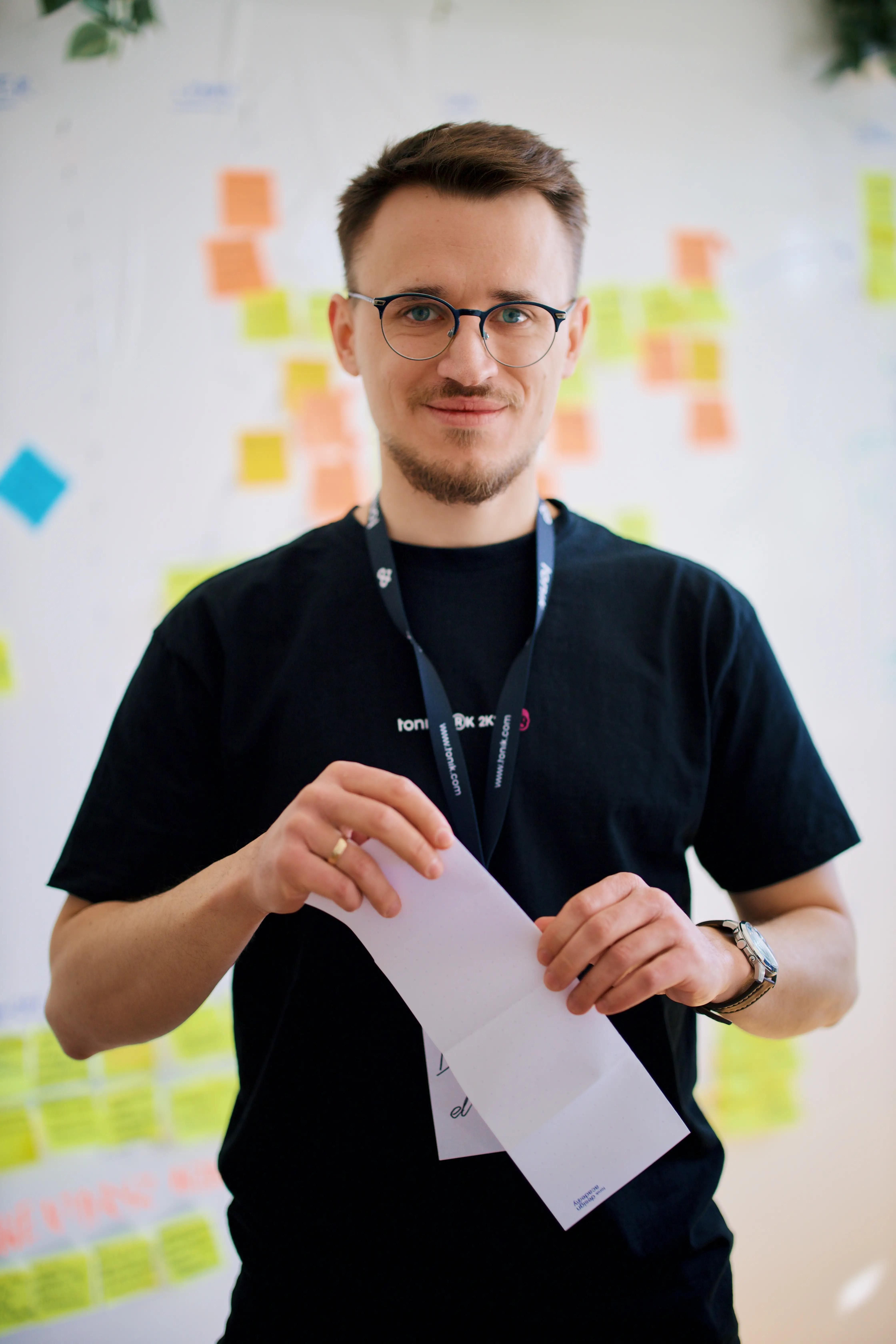

Marcin Rzymek — Product Designer/ Webflow Expert at Netguru
10, 20, or more sites? No problem! - Webflow on a scale for big players
Design & No-Code
🇬🇧 English

I would like to share how we used the Branching feature available in Figma, how it facilitated cooperation between 4 groups (Design, Development, QA, Customer), why it is the ultimate way to version and manage the progress of your work, etc. I'll explain the story of how I got into it, how I use it, how the 4 groups benefit from one feature and also I'll give some protips from my first experiments.
Watch this WaysConf session, then continue with related talks or explore the current programme.
A practical introduction to Figma branching as a version-control workflow for product design. A branch is a safe variation of the main file that records only what changes, allowing designers to explore an idea without cluttering the source of truth. Accepted work can be merged while unrelated screens remain untouched. The talk connects the model to Git, then shows benefits for design systems, sprint work, client focus, and creative experimentation. Branching is most effective when teams add naming, review, and merge conventions so parallel work remains understandable.
A branch creates a controlled space for iteration without duplicating and renaming entire design files manually.
Watch from 4:05Figma compares the branch with main, so accepted work can return without copying every untouched screen.
Watch from 6:50Git-like concepts give design and development a shared language for parallel work, review, and integration.
Watch from 9:34Branches let teams evaluate component updates across realistic screens before altering the shared system.
Watch from 12:24Consistent branch labels and task context reduce coordination effort for designers, clients, and reviewers.
Watch from 18:29These concise notes were edited from automatic captions and checked against the talk structure. They are not a verbatim transcript.
Traditional design versioning often produces copies with dates, initials, and uncertain status. A branch creates a variation that remains connected to the main file and records the intended experiment. Designers can change screens or components without disrupting colleagues, while reviewers retain a clear reference to the current source of truth.
Watch from 4:05When a client or product team accepts the work, Figma compares the branch with main and identifies the changed elements. The merge does not duplicate every screen. This reduces manual copying and makes the review boundary clearer, although teams should still check conflicts and confirm that the branch was created from a sufficiently current main file.
Watch from 6:50Developers already use branches to isolate work, request review, and merge accepted changes. Applying a related model to design gives both disciplines a more compatible way to discuss parallel progress and risk. The workflows are not identical, but the shared concepts help teams coordinate which variation is active and what has reached the product baseline.
Watch from 9:34A component update may look correct in isolation and fail across existing product screens. A branch allows the team to apply the proposed change to representative layouts, inspect the consequences, and involve system consumers before touching main. Once accepted, the controlled merge reduces the chance of leaving experimental components scattered through the library.
Watch from 12:24Branches can become another source of clutter if their purpose and owner are unclear. Include the task, status, or initiative in the name, define who reviews and merges, and remove abandoned work deliberately. Personal creative pages can still exist inside the branch, while the shared convention makes the workflow understandable to everyone else.
Watch from 18:29