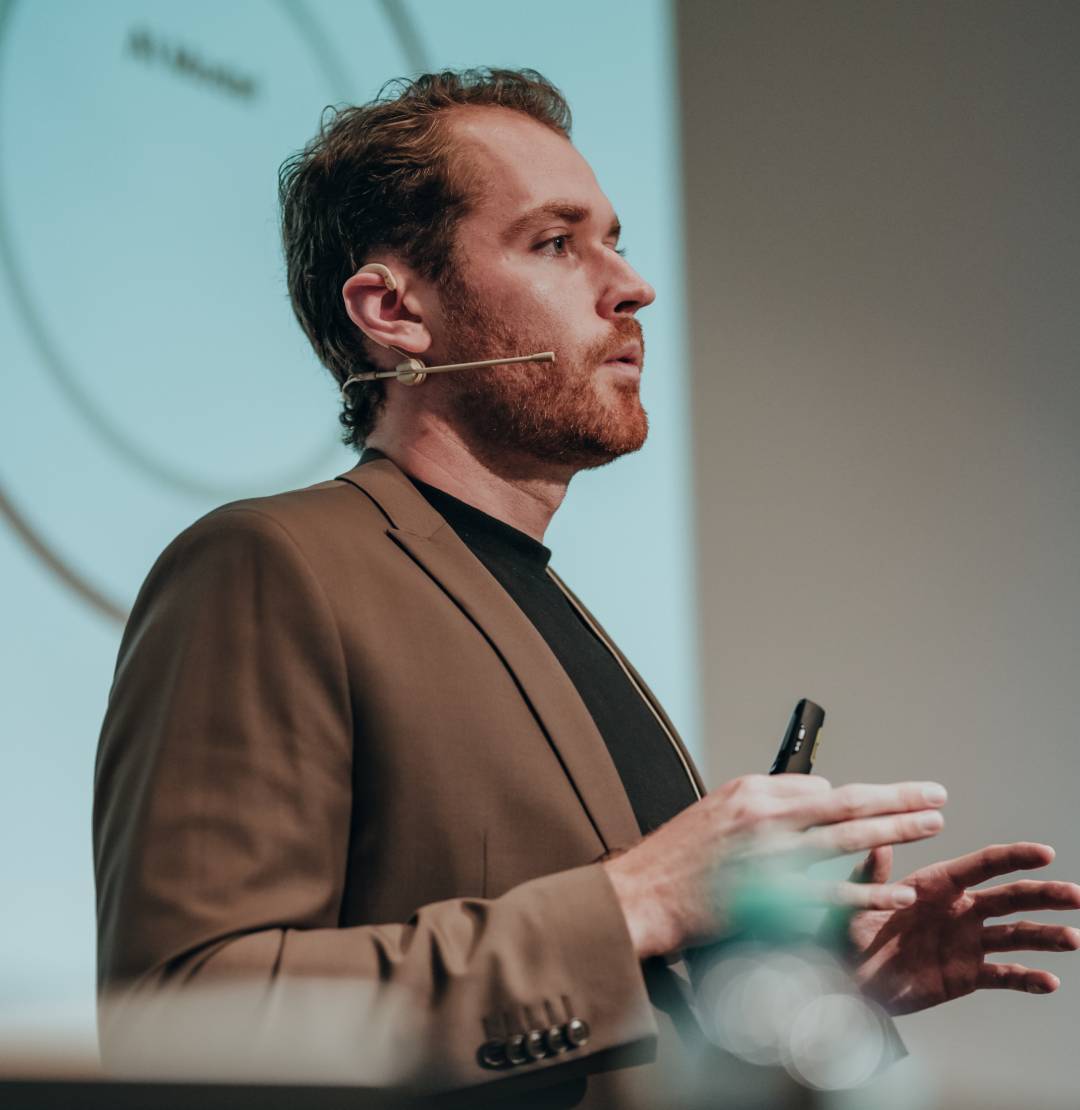

Gábor Pribék — Senior Product Designer at Spline
The Future of 3D Design at Spline
September 4, 2023
15:10
Future of design
🇬🇧 English


Does strict specialization in our industry truly lead to better design? Is it beneficial for our creativity and innovation, or might it restrict us by introducing rigid thinking frameworks?Do these rigid frameworks of thought inadvertently trap us in our own bubble, thus limiting our perspective on the broader context?
Watch this WaysConf session, then continue with related talks or explore the current programme.
Digital product teams develop blind spots when they treat a textbook process, professional silo, or design role as the whole reality. This Polish-language talk contrasts embodied offline experience with abstract digital work, challenges rigid adoption of methods, and examines how functional structures isolate design, development, analytics, and product ownership. It argues that failed experiments can still create organizational learning, that product operations often means translation across disciplines, and that designers should leave their own bubble by studying colleagues, history, ergonomics, and the wider system producing the interface.
Designers should remember that human experience is sensory, social, and contextual rather than only a sequence of screens.
Watch from 1:15A process should reflect the people, maturity, constraints, and quality of work present instead of reproducing a book diagram.
Watch from 7:35An unsuccessful project can still improve how a product partner and team collaborate on the next attempt.
Watch from 11:16Teams optimize their own targets and can unknowingly solve the same problem several times without sharing context.
Watch from 14:51Understanding colleagues, production history, ergonomics, and adjacent disciplines reduces the belief that design alone drives outcomes.
Watch from 23:01These concise notes were edited from automatic captions and checked against the talk structure. They are not a verbatim transcript.
People remember the smell of rain, physical effort, accidents, joy, and other embodied events differently from a digital flow. Interface work can make experience feel abstract and controllable, but the person using the product still lives in a sensory and social world. Designers need that wider frame when judging what an interaction means.
Watch from 1:15No process should be imported unchanged simply because it appears in a course or book. Teams differ in capability, trust, constraints, and the quality they can produce. The method should be adjusted to that environment and revisited as it changes. Calling a process agile or user-centered does not make it so.
Watch from 7:35An experiment may not deliver the expected result, yet the product owner can learn how to work with designers and the team can learn where its assumptions failed. That collaboration knowledge is a real outcome. Treating every miss as worthless encourages safer projects and prevents the organization from reusing what it learned.
Watch from 11:16Design, development, analytics, and other functions often have leaders, targets, and reporting lines that reward attention to their own domain. Each group can be competent while the organization repeats work or produces several versions of the same control. The blind spot comes from the structure, not from individual bad intent.
Watch from 14:51Designers should ask what colleagues know, study the history behind established practices, and connect interface decisions with ergonomics, engineering, and production. Believing that the first designer or the design process is automatically the center of the product narrows the work. Better outcomes appear when disciplines translate and learn from one another.
Watch from 23:01