Most people think a translation device is about translation. The real user problem is different — people want to get things done: at the pharmacy, in a hospital, a taxi, a hotel, an office, or at work.
Screen-first thinking isn't enough. Under stress, on the move, and across a language barrier, the UX becomes the whole system: hardware, audio, the device's response, reliability and minimizing user effort — plus form factor and interactions beyond the interface.
We'll go deep on the parts that are easy to overlook but product-critical: response time, the button, microphone and speaker, how the device is held, feedback, conversation modes, connectivity, errors and recovery. And we'll treat AI as product behavior — it interprets, responds, sometimes gets it wrong, and must build trust on both sides of a conversation — rather than just "adding AI". The lessons apply well beyond hardware: designing for stress and edge moments, reducing user decisions, and making trust part of the product architecture.




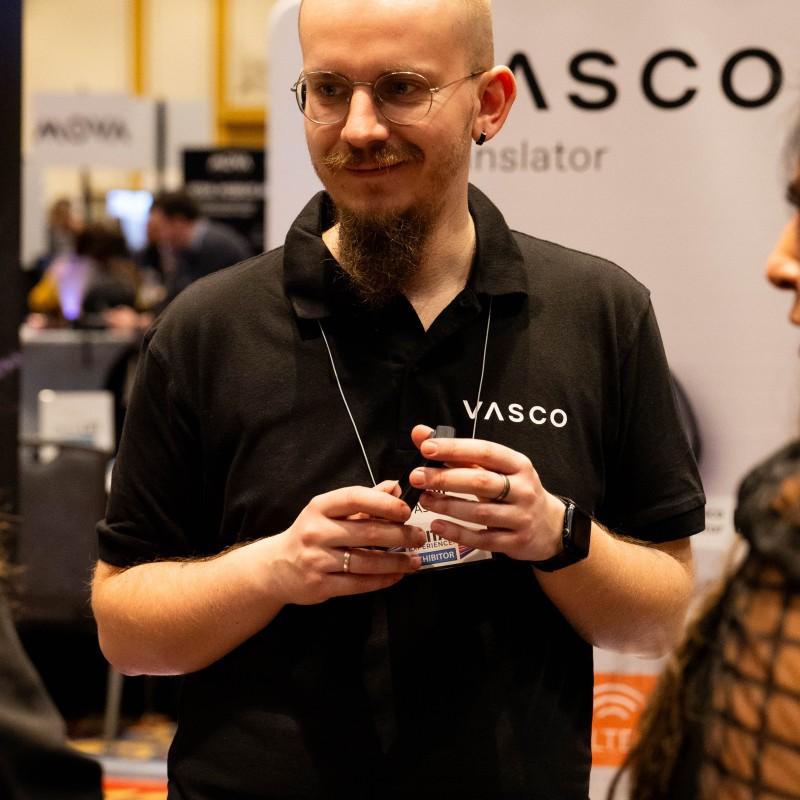


 This Polish talk is live-translated to English with AI, thanks to our partner Vasco Translations — in the WaysConf app on site and on the online stream.